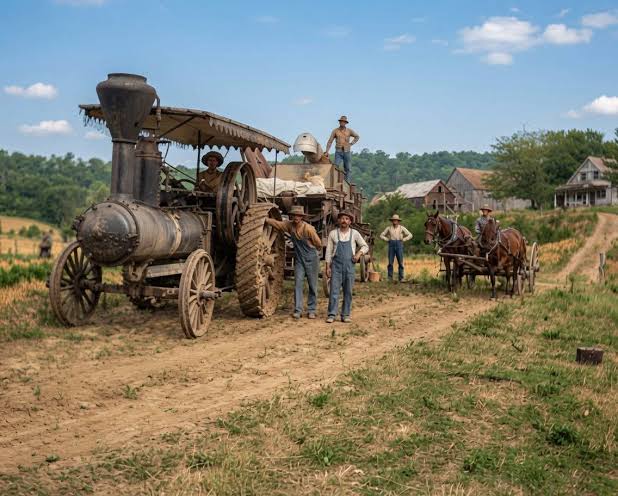
The Development of Tractors in Yugoslavia
Yugoslavia's tractors emerged from its agricultural needs and industrial evolution throughout the 20th century.
Yugoslavia was established as a country in 1918 and existed until 1992, influencing the development of its agricultural machinery, including tractors.
Tractors of Yugoslavia: The Machines That Built a Nation’s Fields
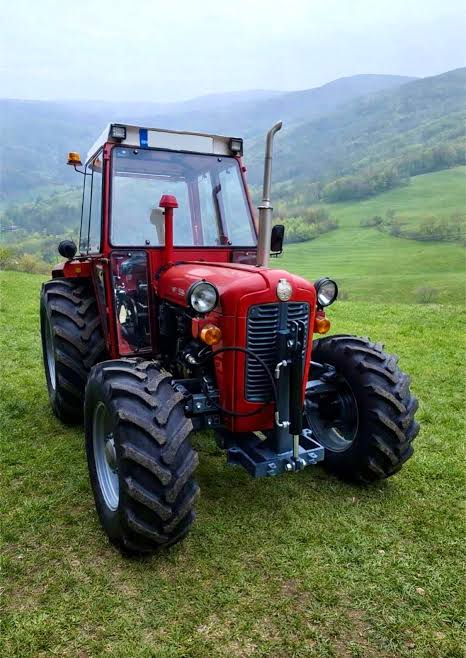
From the first imported tractors to the unmistakable red IMT machines, the story of Yugoslav agriculture is one of ambitious industrialisation, stubborn rural traditions, and tractors that outlived the country that built them.
In villages across the former Yugoslavia, there is a familiar sight. An old red tractor rattles along a narrow road, its diesel engine making considerably more noise than its modest horsepower might suggest. The paint has faded, the seat has probably been replaced, and the driver knows exactly which lever requires a little persuasion.
Chances are, it is an IMT.
For generations of farmers, tractors such as the IMT 533 and 539 were more than agricultural machinery. They were working tools, family investments, and, in many cases, the most valuable piece of equipment on the farm. Some have spent more than half a century ploughing fields, hauling firewood, transporting harvests, and doing whatever else their owners asked of them.
Their story is inseparable from the history of Yugoslavia itself.
Before the Tractor Became a Familiar Sight
When the Kingdom of Serbs, Croats, Bosnians and Slovenes was established in December 1918, the new state inherited an agricultural landscape of remarkable contrasts.
In the fertile plains of Vojvodina and Slavonia, larger estates and commercially oriented farms had already developed under Austro-Hungarian rule. Elsewhere, particularly in the mountainous parts of Bosnia, Montenegro, and southern Serbia, agriculture remained dominated by small family holdings, difficult terrain, and animal power.
The country was overwhelmingly rural. Farming was not simply an occupation; it was the foundation of everyday life for much of the population.
Early tractors were already appearing in parts of Europe, and some found their way onto larger Yugoslav estates during the interwar years. Imported machines from manufacturers such as Fordson represented a new kind of farming, one in which mechanical power could replace teams of horses or oxen.
But tractors were expensive, fuel supplies were not always convenient, and maintenance required mechanical knowledge that many villages did not possess.
For the typical smallholder, a horse, a pair of oxen, or even a neighbour willing to lend a hand remained the more realistic solution.
Mechanisation arrived unevenly, and it would take decades before tractors became ordinary equipment in Yugoslav villages.
A New Country, a New Industrial Ambition
The Second World War devastated much of Yugoslavia’s infrastructure and economy. After 1945, the newly established socialist federation under Josip Broz Tito pursued an ambitious programme of industrial development.
Factories, steelworks, roads, and machinery became symbols of the country’s planned modernisation.
Agriculture was part of that transformation, although its development followed a more complicated path than heavy industry.
The government initially encouraged collective farming, but the Soviet-style collectivisation drive encountered strong resistance and was largely abandoned in the early 1950s. Private family farms remained central to Yugoslav agriculture, operating alongside socially owned agricultural enterprises and cooperatives.
This created a distinctive agricultural system.
Large enterprises could operate substantial fleets of tractors, combines, and specialised equipment. Small private farmers, meanwhile, often worked relatively modest plots, sometimes fragmented into several separate fields.
The machines that succeeded in Yugoslavia had to suit both worlds.
And one manufacturer would eventually become a household name.
IMT: The Red Tractor That Defined an Era
Few industrial names are as closely associated with Yugoslav farming as IMT — Industrija mašina i traktora.
Based in Belgrade, IMT developed into one of the country’s best-known agricultural machinery manufacturers. Its history grew out of the post-war industrial expansion, and its tractor production was closely connected to British Ferguson technology and later Massey Ferguson designs.
This connection mattered enormously.
The Ferguson system, with its three-point linkage and hydraulic implement control, had already transformed tractor design internationally. It allowed tractors and implements to work together more effectively, improving traction and making a relatively small machine capable of performing a wide variety of tasks.
IMT brought this practical approach to Yugoslav farms.
Rather than concentrating exclusively on enormous machines, the company became particularly well known for compact, straightforward tractors suited to the country’s many small and medium-sized holdings.
The IMT 533 and its successor, the IMT 539, became especially familiar.
Their appeal was not based on luxury or technological extravagance. Farmers valued them because they were comparatively simple, versatile, and repairable.
An IMT could plough a field in the morning, pull a trailer of maize in the afternoon, and carry firewood home before sunset.
On many farms, it did all three.
Why the IMT 539 Became a Legend
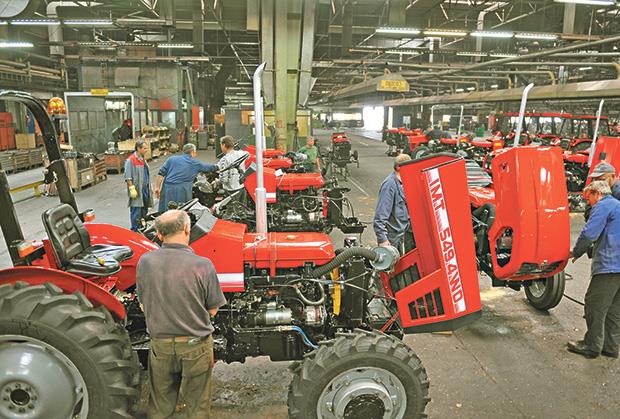
The IMT 539, commonly associated with a three-cylinder diesel engine producing around 39 horsepower, occupied a particularly useful position in the agricultural market.
It was powerful enough for many everyday tasks without being excessively large for narrow village roads, orchards, or smaller fields.
Its mechanical simplicity became one of its greatest advantages.
Owners could perform much of the routine maintenance themselves, and local mechanics became familiar with the machine’s construction. Replacement parts and knowledge circulated through agricultural communities, extending the working lives of tractors far beyond what their manufacturers might originally have expected.
It was not a perfect tractor.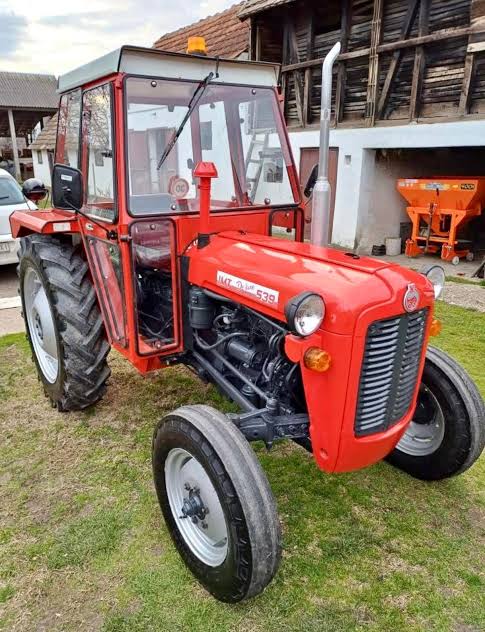
Operators experienced vibration, noise, limited comfort, and the physical demands associated with machinery of its generation. But these shortcomings were often tolerated because the tractor performed the jobs that mattered.
Even today, surviving IMT tractors remain a common sight throughout Serbia, Bosnia and Herzegovina, Croatia, and neighbouring countries.
Their continued use is a reminder that agricultural machinery is judged not only by its specifications, but also by how reliably it serves the people who depend on it.
Rakovica: Another Familiar Name in Yugoslav Fields
IMT was not the only important name in Yugoslav tractor manufacturing.
Industrija motora Rakovica, commonly known as IMR, also played a significant role in producing tractors and engines.
Rakovica tractors became recognizable for their robust construction and practical design. Models such as the Rakovica 60 and 65 were widely associated with the country’s agricultural mechanisation.
Like IMT, Rakovica benefited from industrial cooperation and licensed technology, including connections to Perkins engine designs.
The distinction between the two brands was often a matter of local preference, service availability, price, and the type of work a farmer needed to perform.
In some villages, IMT dominated. In others, Rakovica machines were equally familiar.
Arguments about which tractor was better could last longer than the actual repair being discussed.
What both manufacturers shared was an emphasis on machinery that could survive demanding agricultural conditions without requiring highly specialised service facilities.
Torpedo and the Industrial Strength of Rijeka
On the Adriatic coast, Rijeka developed its own important connection to tractor manufacturing through Torpedo.
The company had a long industrial history associated with engines and mechanical engineering. During the socialist period, it became an important producer of diesel engines and agricultural tractors, including machines developed through cooperation with the German manufacturer Deutz.
Torpedo tractors were especially associated with air-cooled diesel engine technology.
This distinguished many of them from competing machines that relied on liquid cooling.
Air-cooled engines offered practical advantages in certain working environments, eliminating the need for a conventional radiator and coolant system. They also had their own operating and maintenance requirements.
For farmers accustomed to the distinctive sound of a Torpedo engine, the machines developed a character of their own.
Torpedo’s story also illustrates how Yugoslavia’s industrial economy was more internationally connected than the image of an isolated socialist state might suggest.
Yugoslavia Was Never Completely Cut Off from Western Technology
One of the more interesting aspects of Yugoslav industrial history is the country’s position between East and West.
After the Tito–Stalin split in 1948, Yugoslavia followed a political and economic path that differed from that of the Soviet-led Eastern Bloc.
It developed relationships with Western countries while maintaining its socialist system and becoming a leading member of the Non-Aligned Movement.
These connections influenced its machinery industry.
Technology licensing, industrial cooperation, imported components, and foreign designs played important roles in the development of domestic production.
Ferguson and Massey Ferguson technology influenced IMT. Perkins connections were important to engine manufacturing. Deutz technology helped shape Torpedo’s tractor range.
Yugoslav agriculture also used imported tractors from both Western and Eastern European manufacturers.
Depending on the region and period, farms could operate machines from brands such as Zetor, Ursus, Fiat, and other foreign producers alongside domestic equipment.
The result was a varied agricultural machinery landscape rather than one dominated by a single national design.
The Difference Between the Plains and the Mountains
To understand why so many different tractors operated in Yugoslavia, it helps to look at the geography.
The broad fields of Vojvodina were suitable for larger agricultural machines and more extensive mechanisation. Large agricultural enterprises could justify powerful tractors, combines, and specialised equipment.
In contrast, much of Bosnia and Herzegovina, Montenegro, and parts of Croatia, Serbia, and Slovenia presented entirely different challenges.
Fields were smaller, slopes steeper, and access roads narrower.
A tractor that performed beautifully on a large, flat field could be inconvenient or impractical on a small hillside holding.
Compact tractors therefore remained essential.
In many regions, mechanisation was also gradual. Farmers did not necessarily replace animal power overnight. Horses and oxen continued to work alongside tractors, particularly where terrain, costs, or the size of a holding made traditional methods practical.
The arrival of a tractor often changed the rhythm of an entire household.
Work that once required several people and animals could be completed more quickly. Transport became easier. Families could cultivate land with less manual labour, although owning a tractor also brought expenses for fuel, repairs, implements, and spare parts.
Mechanisation represented progress, but it was never free.
A Tractor Was Often a Family Investment
For many Yugoslav families, buying a tractor was one of the largest financial decisions they would make.
A tractor was not simply purchased for convenience. It represented an opportunity to increase production, reduce dependence on hired machinery, and provide services to neighbouring farmers.
Owners could earn additional income by ploughing other people’s fields, transporting materials, or performing seasonal agricultural work.
The tractor became part of the village economy.
In some communities, one machine served several households. In others, farmers gradually acquired their own equipment as incomes and access to machinery improved.
The relationship between farmer and tractor was therefore unusually personal.
A machine might be maintained by a father, inherited by a son, and eventually restored by a grandson.
This helps explain why so many old Yugoslav tractors remain in working condition today.
Their owners are not always keeping them for nostalgia.
Sometimes the old tractor is still perfectly capable of doing the job.
The 1970s and 1980s: Mechanisation Becomes Ordinary
By the 1970s and 1980s, tractors were an established part of Yugoslav agriculture, although ownership and mechanisation levels still varied significantly by region and farm type.
Domestic manufacturers supplied a broad range of machines, while agricultural enterprises and private farmers continued to use imported equipment.
The sight of tractors travelling between villages, hauling trailers filled with crops, or working during the autumn ploughing season became increasingly familiar.
The machines also reflected the limitations of the agricultural system.
Many private farms remained small and fragmented, reducing the economic advantages of larger machinery. Meanwhile, substantial agricultural enterprises operated under different financial and organisational conditions.
Yugoslavia’s tractor industry served this mixed market.
Its most enduring products were often those that offered a practical compromise between price, capability, and ease of maintenance.
That was precisely where machines such as the IMT 539 found their place.
The Breakup of Yugoslavia and the Fate of Its Tractor Industry
The political breakup of Yugoslavia during the 1990s profoundly affected the region’s industrial economy.
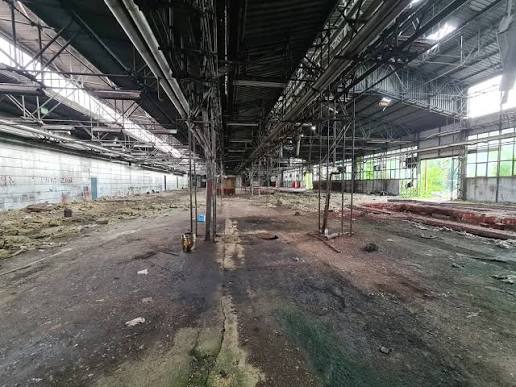
War, sanctions, disrupted supply chains, lost markets, economic instability, and the difficult transition from socialist industry to market-based systems created enormous pressure on manufacturers.
Factories that had once served a market stretching across six republics found themselves operating in a fragmented economic landscape.
Some lost suppliers or customers. Others struggled with outdated equipment, financial difficulties, and changing competition.
The tractor industry was not spared.
IMT, Rakovica, and Torpedo all faced serious difficulties in the decades following Yugoslavia’s dissolution, although their individual histories and eventual outcomes differed.
Yet the tractors themselves continued working.
A political border could divide a former republic, but it did not suddenly make an IMT engine impossible to repair.
Farmers continued using the equipment they already owned, and independent workshops, spare-parts suppliers, and enthusiasts helped keep many machines alive.
The factories might have changed beyond recognition, but their products remained scattered across thousands of farms.
Why Yugoslav Tractors Still Matter
There is something remarkable about a tractor that continues working decades after it left the assembly line.
Modern agricultural machines offer far greater power, operator comfort, precision guidance, emissions controls, and electronic management systems. They can perform tasks that would have been difficult to imagine when many Yugoslav tractors were first produced.
But technological progress does not automatically make every older machine obsolete.
On a small holding, an inexpensive and repairable tractor can still be economically useful.
The continued popularity of IMT, Rakovica, and Torpedo machines reflects the practical demands of the region’s agriculture, but also the mechanical knowledge passed down between generations.
A farmer who has worked with the same tractor for thirty years often understands its behaviour better than any service manual could describe.
That knowledge is part of the machinery’s history.
More Than Red Paint and Diesel Smoke
The history of tractors in Yugoslavia cannot be separated from the wider story of the country.
It includes the difficult agricultural conditions inherited after 1918, the ambitious industrialisation that followed the Second World War, cooperation with foreign manufacturers, and the economic and political upheavals of the 1990s.
But it is also a story of ordinary farmers.
People who saved money to buy their first tractor. Mechanics who learned to rebuild engines with limited resources. Families who used the same machine for planting, harvesting, hauling timber, and countless other tasks.
The factories built the tractors, but farmers gave them their reputation.
And somewhere in a village in the Balkans, an old IMT is probably starting another working day.
Its paint may have faded, its hour meter may have stopped years ago, and its driver may have no intention of replacing it.
For that farmer, the tractor’s history is not finished.
It is still being written.
Tractorholics Historical Feature — Yugoslav Agricultural Machinery and Industrial Heritage
Sources
- Yugoslavia (Wikipedia) retrieved 13 Oct 2026
- Tractor (Wikipedia) retrieved 13 Oct 2026
Read next
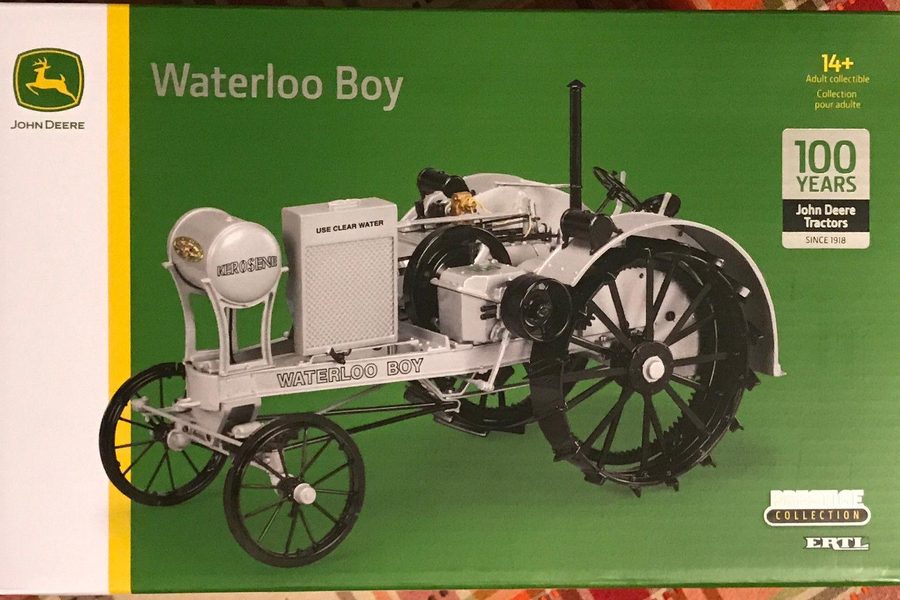
John Deere Waterloo Boy Silver 1:16 – 100th Anniversary
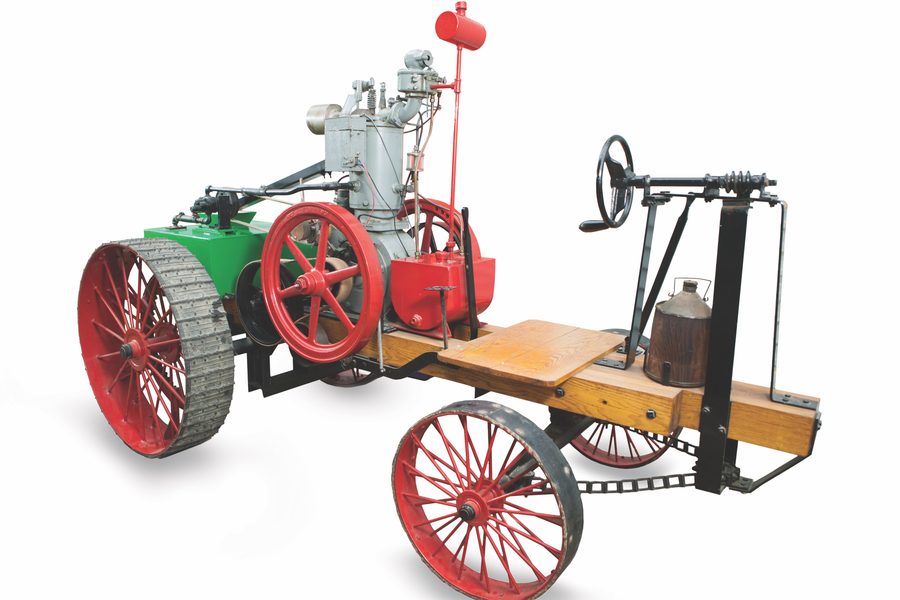
John Froelich and the 1892 Gasoline Tractor: The Failure That Changed Farming Forever