John Froelich and the 1892 Gasoline Tractor: The Failure That Changed Farming Forever
John Froelich invented the first stable gasoline-powered tractor in 1892, marking a significant development in agricultural machinery.
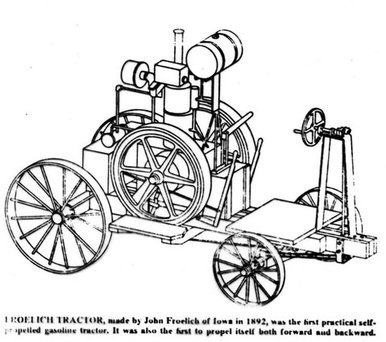
In 1892, John Froelich built the first stable gasoline-powered tractor, which featured forward and reverse gears, laying the groundwork for future agricultural machinery.
In the autumn of 1892, an Iowa inventor took a revolutionary machine into the wheat fields of South Dakota. It could travel forward, reverse, and work without a steam boiler. The farmers of his time weren’t ready to buy it. But John Froelich had helped set agricultural machinery on a path from which it would never turn back.
The Machine That Arrived Before Its Time
Some of history’s most important inventions are commercial failures.
They arrive before the market understands them, before the supporting technology has matured, or before customers are willing to abandon something familiar. Their creators may never enjoy the rewards, but the ideas survive.
John Froelich’s gasoline-powered tractor belongs to that category.
In 1892, when steam engines were still the dominant source of mechanical power for large-scale threshing operations, Froelich developed a self-propelled machine powered by an internal combustion engine. It was a bold departure from the heavy, water-dependent equipment that agricultural contractors had relied upon for decades.
His machine worked. It travelled under its own power, operated threshing equipment, and demonstrated that gasoline could replace steam in demanding agricultural work.
Yet the company formed to commercialise the invention struggled to find buyers.
The tractor was too unfamiliar, too experimental, and perhaps simply too early.
More than a century later, however, Froelich’s name occupies an important place in the history of agricultural mechanisation. The company that emerged from his early experiments would eventually become part of John Deere’s industrial empire.
To understand why this unsuccessful machine mattered so much, we must return to a time when operating a tractor meant lighting a fire.
Before Gasoline: The Age of Steam and Heavy Iron
During the second half of the nineteenth century, steam power transformed agricultural production across Europe and North America.
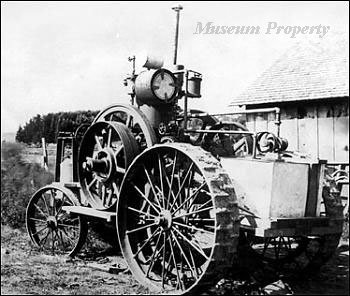
Traction engines provided the mechanical force needed to operate threshing machines, haul equipment, and perform other demanding agricultural tasks. For large farms and specialist contractors, they represented an extraordinary improvement over human and animal labour.
But steam power came with serious disadvantages.
A traction engine needed fuel, water, time, and an experienced crew. Before work could begin, the boiler had to be prepared and steam pressure raised. During operation, the crew had to monitor the fire, water level, lubrication, and mechanical condition of the engine.
Water was particularly important.
On the Great Plains, where farms and threshing operations could be separated by considerable distances, securing an adequate supply was not always convenient.
Steam engines were also heavy. Their enormous wheels could damage soft ground, and moving them between working locations required care.
For John Froelich, these limitations presented an opportunity.
What if a machine could provide the same useful mechanical power without requiring a boiler?
What if the operator could start working without first raising steam?
And what if the machine could move between fields using an engine powered by gasoline?
These questions were not entirely new. Inventors were already experimenting with internal combustion technology. But applying it successfully to agricultural traction was another matter.
Froelich was determined to try.
John Froelich: The Iowa Inventor Who Challenged Steam
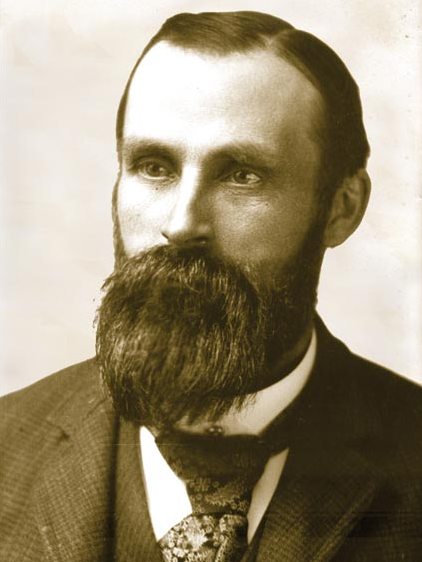
John Froelich was born in Iowa in 1849, at a time when American agriculture was undergoing enormous change.
Railroads were expanding, settlement was spreading westward, and the demand for agricultural machinery was growing rapidly.
Froelich developed a practical understanding of the mechanical problems faced by farmers and threshing contractors. He was familiar with the demands of operating heavy machinery in rural conditions, where reliability mattered more than elegance.
His interest in mechanical innovation eventually led him toward gasoline engines.
By the early 1890s, internal combustion engines were becoming increasingly practical for stationary applications. They could power equipment without the infrastructure required by a steam boiler.
But building a gasoline engine was only part of the challenge.
To create a useful agricultural tractor, Froelich needed to combine the engine with a chassis, transmission, steering system, and drive arrangement capable of moving a heavy machine under load.
The result would become one of the most significant early experiments in tractor history.
1892: The Year Agricultural Power Took a Different Direction
Working with blacksmith Will Mann, Froelich developed his gasoline-powered traction engine in 1892.
The machine incorporated a single-cylinder gasoline engine and a transmission that allowed it to move both forward and backward.
That reversing capability was especially important.
Agricultural machines frequently needed to manoeuvre around equipment, buildings, and working areas. A practical tractor required more than the ability to travel in a straight line.
Froelich’s design demonstrated that an internal combustion engine could provide power for both propulsion and agricultural work.
The machine was taken to South Dakota for the threshing season, where it was used to power a threshing outfit.
Accounts of the demonstration describe the tractor successfully performing agricultural work, establishing that the underlying concept was technically viable.
It was not the sleek, efficient tractor that farmers would recognise decades later.
It was heavy, mechanically unconventional, and built at a time when gasoline-engine technology was still developing.
Nevertheless, it proved something important.
An agricultural traction engine did not have to run on steam.
The 1892 Froelich tractor represented an early practical demonstration of gasoline-powered agricultural traction.
Why Forward and Reverse Gears Mattered
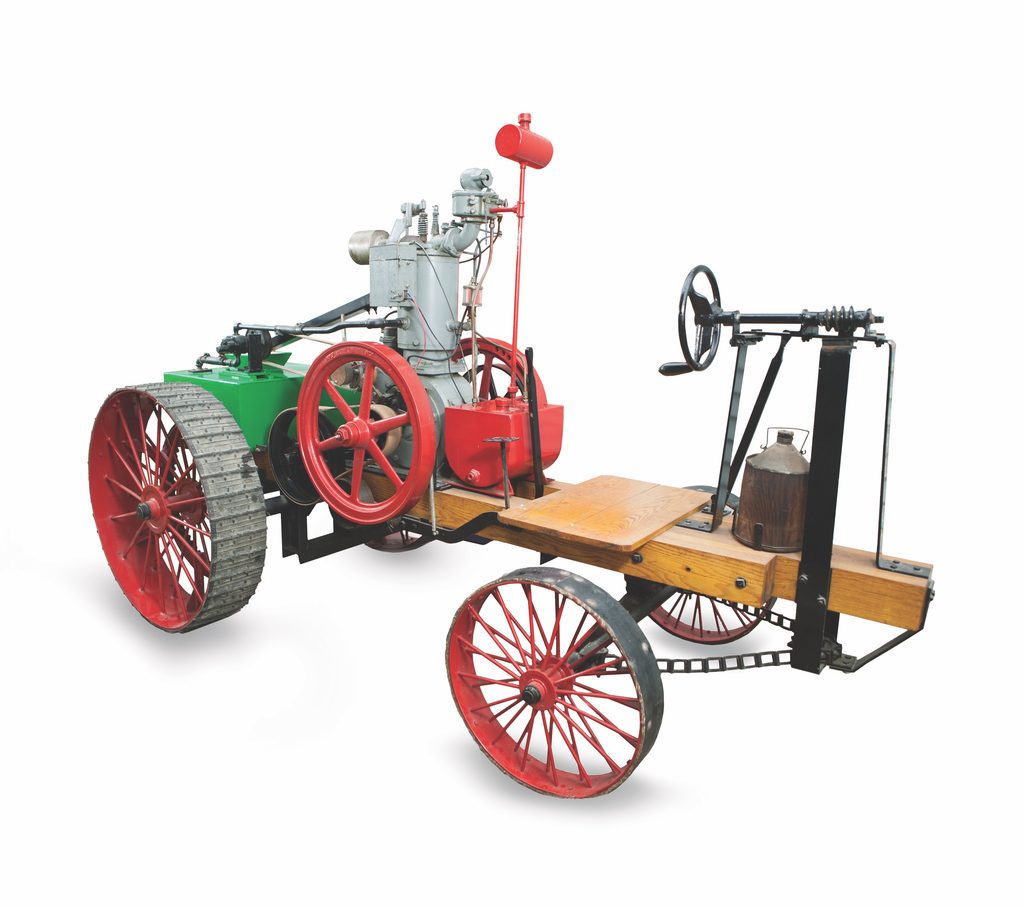
Today, reversing a tractor is so ordinary that it barely deserves a mention.
In 1892, however, developing a practical propulsion and transmission system for an internal combustion agricultural machine was a considerable engineering challenge.
The engine had to deliver useful power through the drivetrain while coping with changes in load and operating conditions.
The ability to reverse improved manoeuvrability and helped demonstrate that the machine could function as a working agricultural vehicle rather than merely a stationary engine mounted on wheels.
This distinction is central to Froelich’s achievement.
He did not invent the internal combustion engine, nor was he the first person to experiment with motorised road vehicles or agricultural machinery.
His contribution was the successful integration of gasoline power into a self-propelled agricultural traction machine that could perform real farm work.
It was a step toward the modern tractor, even though many additional developments would be needed before gasoline tractors became commercially widespread.
From Experiment to Business: The Waterloo Company
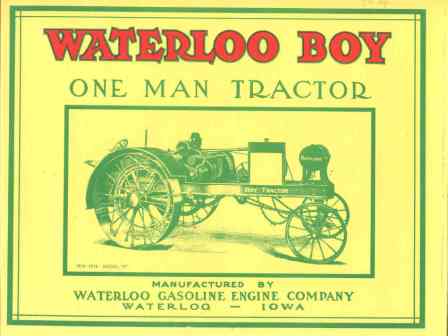
A successful field demonstration did not automatically produce a successful business.
In 1893, Froelich and a group of Iowa investors established the Waterloo Gasoline Traction Engine Company in Waterloo, Iowa.
The objective was ambitious: manufacture and sell gasoline-powered agricultural tractors.
At the time, the agricultural machinery market was already competitive. Farmers and contractors could purchase equipment from established steam-engine manufacturers with recognised reputations and service networks.
A gasoline-powered tractor represented an unfamiliar investment.
Potential customers had legitimate questions.
Would the engine withstand years of demanding work? Could local mechanics repair it? Would replacement parts be available? Was gasoline readily obtainable? And would the machine prove more economical than established steam equipment?
These concerns were difficult for a small new manufacturer to overcome.
The company moved forward with production, but commercial results were disappointing.
Four Tractors, Two Sales, and Two Returns
According to commonly repeated accounts of the Waterloo company’s early history, four tractors were built, two were sold, and both were eventually returned.
For a company hoping to establish a new category of agricultural machinery, this was a severe setback.
The tractors had demonstrated technical potential, but the market was not yet convinced.
There is an important difference between building a machine that works and building one that customers can operate profitably for years.
Early gasoline engines were still relatively unfamiliar in agricultural environments. Reliability, maintenance, fuel supply, and cost all presented challenges.
Steam technology, despite its disadvantages, was well understood.
Experienced operators knew how to manage boilers, repair mechanical components, and maintain the engines that had served farms for decades.
Froelich’s tractor required buyers to accept a different technology and a different set of risks.
Few were prepared to do so.
The company faced a decision familiar to many pioneering manufacturers: continue investing in a product that customers were reluctant to purchase, or redirect its engineering capabilities toward a more immediately profitable market.
It chose the latter.
Early gasoline tractors had to prove not only that they could work, but that they could compete economically with established steam machinery.
The Pivot That Kept the Business Alive
During the mid-1890s, the Waterloo enterprise shifted away from manufacturing tractors and concentrated on stationary gasoline engines.
This was a commercially sensible direction.
Stationary engines had a growing market in agriculture and industry. They could power pumps, mills, feed-processing equipment, and other machinery without requiring the complicated drivetrain of a self-propelled tractor.
The company underwent changes in ownership and organisation, eventually operating under the Waterloo Gasoline Engine Company name.
The move away from tractors did not mean that the original experiment had been forgotten.
The engineering knowledge gained from developing gasoline-powered agricultural machinery remained valuable.
More importantly, the business survived.
While Froelich’s original tractor did not become a commercial success, the Waterloo enterprise continued developing gasoline-engine technology during a period when internal combustion power was becoming increasingly important.
That survival would have consequences far beyond Iowa.
The company’s shift toward stationary gasoline engines helped preserve the business during the early years of internal combustion technology.
Waterloo Boy: The Tractor That Succeeded Where Froelich’s Failed
The next major chapter unfolded in the early twentieth century.
By then, agricultural conditions were changing.
Internal combustion engines had become more reliable. Manufacturers had gained experience with transmissions, cooling systems, ignition, and fuel delivery. Farmers were increasingly interested in mechanical alternatives to horses and steam engines.
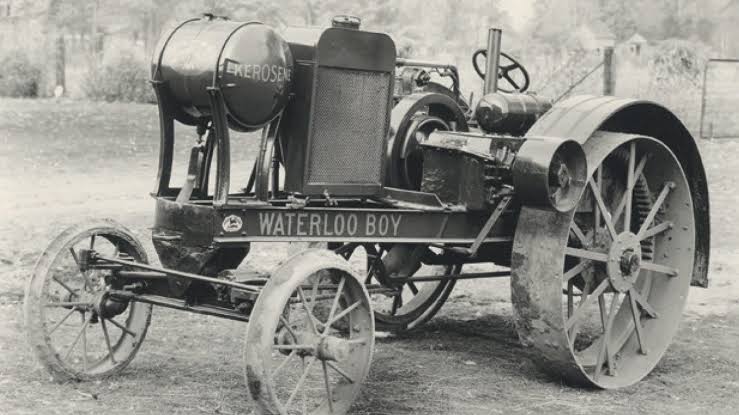
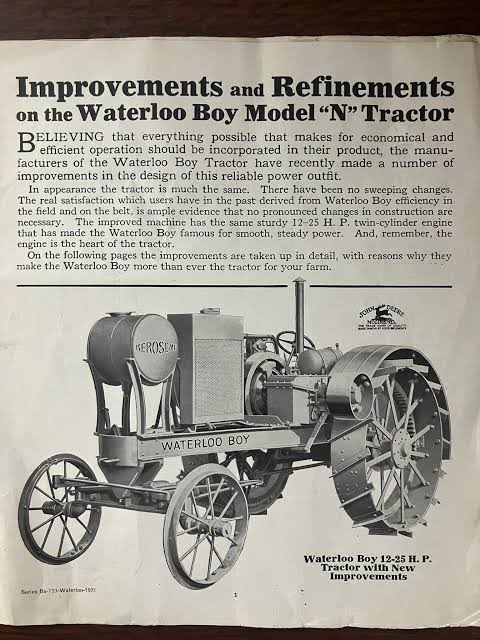
The Waterloo company returned to tractor manufacturing and developed the Waterloo Boy line.
The Waterloo Boy became one of the important early commercially successful American tractors.
Unlike Froelich’s original experimental machine, it arrived at a time when the agricultural market was becoming more receptive to gasoline-powered traction.
Waterloo Boy tractors helped establish the company as a serious agricultural machinery manufacturer.
Their success was built on decades of accumulated engineering knowledge and changing economic conditions.
The agricultural tractor was no longer simply an experimental possibility.
It was becoming a practical commercial product.
The John Deere Connection: A Legacy Few Farmers Realise
In 1918, Deere & Company purchased the Waterloo Gasoline Engine Company.
The acquisition marked a turning point in John Deere’s history.
Deere was already an established agricultural equipment manufacturer, particularly associated with ploughs and other implements. Acquiring Waterloo provided an established position in the rapidly expanding tractor market.
The Waterloo Boy continued under John Deere ownership before the company developed its own subsequent tractor designs.
In 1923, John Deere introduced the Model D, which became one of the defining tractors of the company’s early manufacturing history.
The connection between Froelich’s 1892 experiment and the modern John Deere business is therefore significant, although it should not be understood as a direct, unchanged line of tractor designs.
Froelich’s machine did not simply evolve into the Model D.
Instead, his experiment helped establish an enterprise that survived, adapted, developed successful tractors, and eventually became part of one of the world’s largest agricultural machinery manufacturers.
That is a different kind of legacy, and arguably a more interesting one.
The original tractor failed to find a market.
The company it inspired became part of agricultural history.
Was John Froelich Really the Inventor of the First Gasoline Tractor?
Historical claims about the “first tractor” require some care.
Agricultural mechanisation developed through the work of numerous inventors, manufacturers, and engineers across several countries.
Steam-powered self-propelled machines existed before Froelich’s experiment, and other inventors were investigating internal combustion technology during the same period.
Froelich is widely credited with building one of the earliest successful gasoline-powered tractors, particularly one capable of forward and reverse movement and demonstrated in agricultural work in 1892.
That is a substantial achievement without needing to claim that every aspect of the modern tractor originated with a single machine.
The modern tractor emerged through many separate developments, including improved engines, transmissions, pneumatic tires, power take-off systems, hydraulic controls, and standardised implement connections.
Froelich helped establish the feasibility of gasoline-powered agricultural traction.
Others transformed that possibility into a mature industry.
The Difference Between Inventing and Changing the World
History often celebrates inventors as though a successful demonstration immediately changes society.
In reality, new technologies usually pass through a long and difficult period between invention and widespread adoption.
Froelich’s story illustrates that process particularly well.
His tractor worked, but the market was not ready.
Steam engines remained familiar and useful. Gasoline engines still needed technical improvement. Agricultural businesses were cautious about investing in unproven equipment.
Over the following decades, those conditions changed.
Internal combustion tractors became more dependable, more affordable, and easier to operate.
As production expanded, farmers gained access to machinery that could replace animal power across an increasingly wide range of tasks.
The transformation was gradual, but its consequences were enormous.
The tractor eventually became one of the most important machines in modern agriculture.
Froelich did not live to see every stage of that transformation. He died in 1933, when tractor manufacturing had already become an established industry.
By then, the world of farming had changed dramatically from the one in which he had built his first machine.
What Remains of Froelich’s Achievement?
Today, John Froelich is remembered as an important pioneer of agricultural engineering.
His name is associated with the early development of gasoline-powered tractors, the industrial history of Waterloo, Iowa, and the technological transition away from steam.
But perhaps the most remarkable part of his story is the contrast between the invention’s immediate failure and its long-term significance.
Four early tractors did not create a commercial revolution.
Two returned machines hardly suggested a promising future.
Yet the underlying idea—that a compact internal combustion engine could propel agricultural machinery and provide useful working power—would eventually become fundamental to farming.
The machine itself was only a beginning.
The real revolution came when engineers, manufacturers, and farmers spent the following decades turning that beginning into something dependable, affordable, and widely useful.
John Froelich’s 1892 experiment remains an important milestone in the development of gasoline-powered agricultural machinery.
The Tractor That Failed—and the Idea That Won
There is something fitting about the fact that John Froelich’s place in history rests on a tractor that farmers largely refused to buy.
He recognised the limitations of steam power and attempted to solve them with a technology that was still in its infancy.
The result was imperfect, commercially unsuccessful, and ahead of its time.
But it demonstrated a principle that would help reshape agriculture.
Today, a modern tractor can operate with satellite guidance, electronic engine management, sophisticated hydraulics, and automated steering. Its capabilities would be almost unimaginable to a farmer standing beside Froelich’s experimental machine in 1892.
Yet the essential ambition remains familiar.
Build a machine that can move itself, deliver mechanical power, and make agricultural work more productive.
Froelich helped prove that gasoline could do the job.
He did not win the market in 1892.
But his idea helped point farming toward its future.
Tractorholics Historical Feature | Agricultural Inventions, Tractor History & American Engineering Pioneers
Common questions
What was unique about Froelich's tractor?
Froelich's tractor was the first stable gasoline-powered tractor to feature forward and reverse gears, which was a significant advancement over existing steam-powered models.
Why did the Waterloo Gasoline Engine Company stop producing tractors?
The company ceased tractor production after being sold to John W. Miller in 1895, who decided to focus on manufacturing plain gasoline engines instead.
How many tractors did Froelich's company produce?
The Waterloo Gasoline Engine Company produced four tractors, but only two were sold, and both were returned by unhappy customers.
Sources
- John Froelich (Wikipedia) retrieved 13 Oct 2026
- Waterloo Gasoline Engine Company (Wikipedia) retrieved 13 Oct 2026
Read next
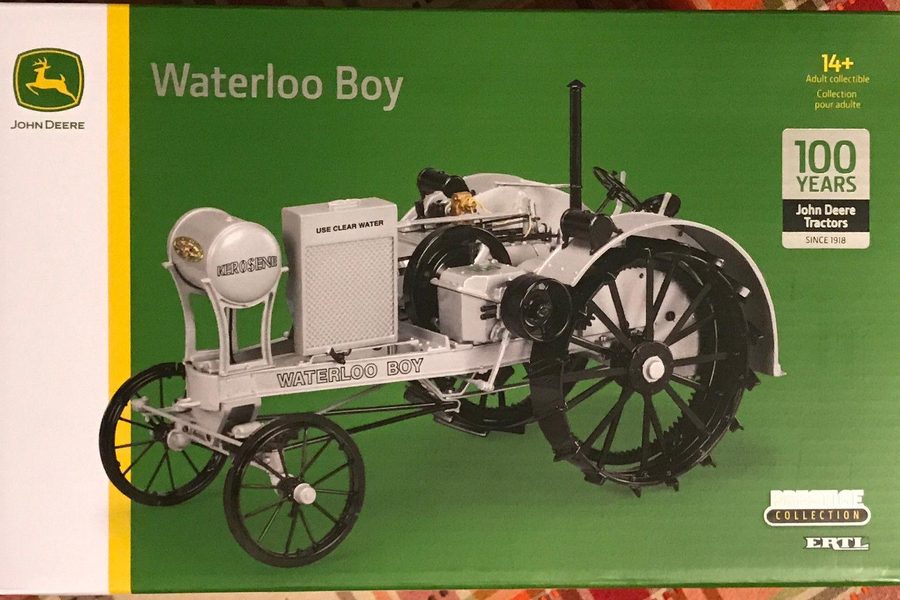
John Deere Waterloo Boy Silver 1:16 – 100th Anniversary
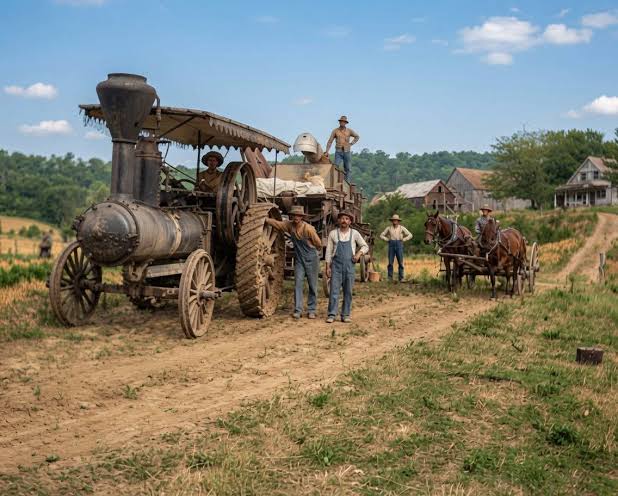
The Decline of Steam Power in Agriculture