Harry Ferguson and the Three-Point Hitch System
Harry Ferguson's three-point hitch revolutionised tractor design and agriculture, making mechanisation accessible to average farmers worldwide.
Harry Ferguson developed the three-point hitch system, first introduced to American tractors in 1939 with the Ford 9N, which enhanced traction and efficiency in farming.
Introduction to Harry Ferguson
Harry Ferguson was a British inventor and mechanic, recognised for his significant contributions to the agricultural tractor industry, particularly through his development of the three-point hitch system. His innovations not only transformed tractor design but also facilitated the mechanisation of agriculture, making it more accessible to farmers.
The Three-Point Hitch System
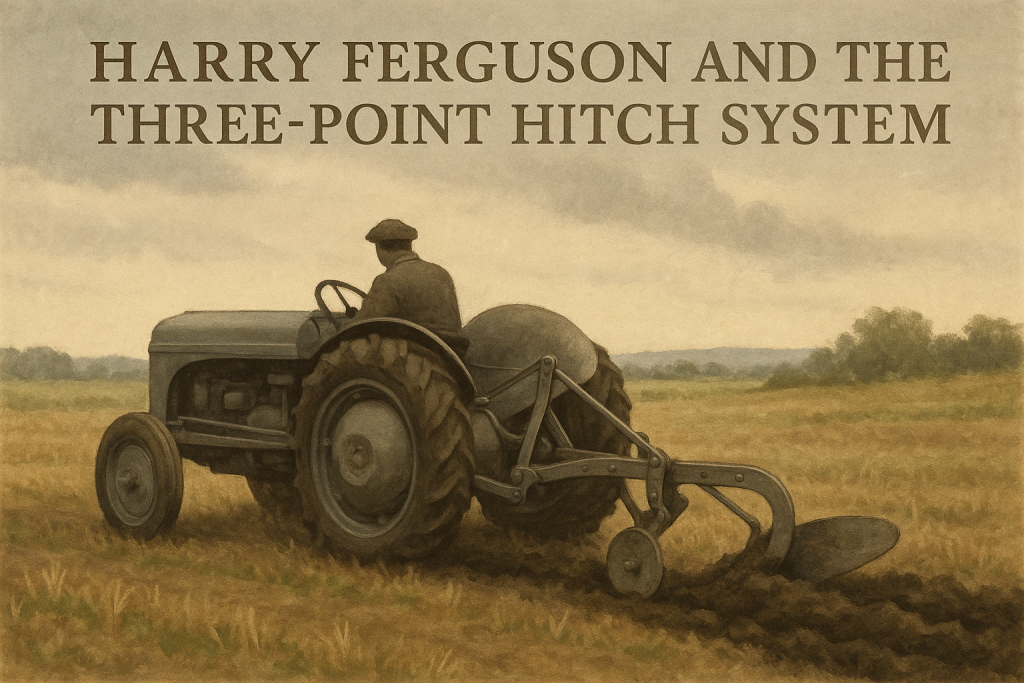
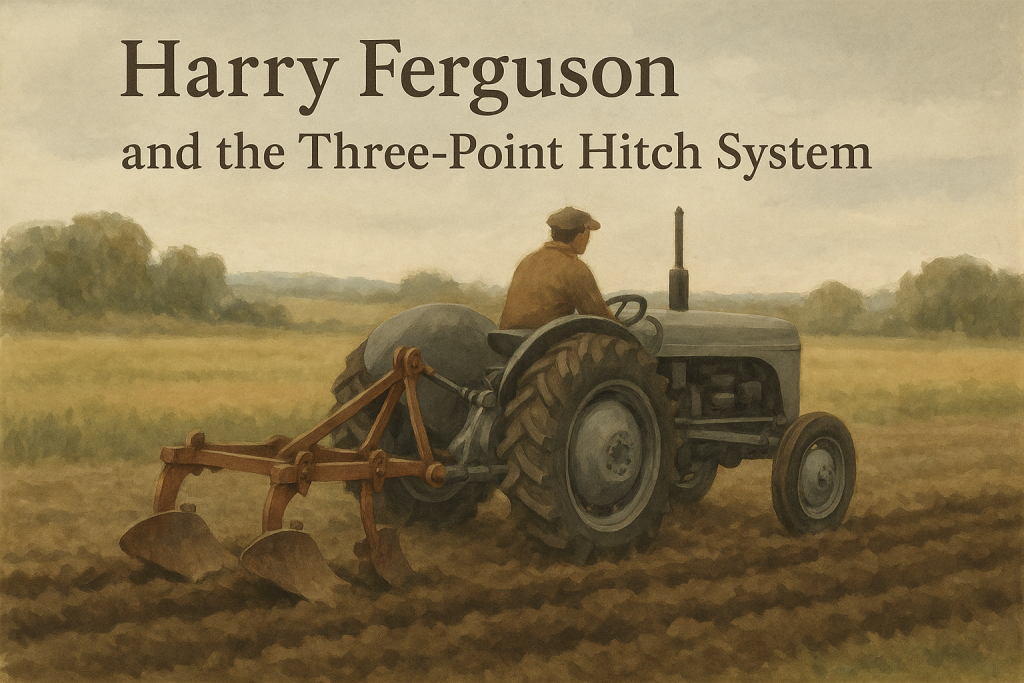
The three-point hitch, also known as the three-point linkage in British English, is a crucial mechanism for attaching implements to tractors. This design allows for a fixed orientation of the implement relative to the tractor, enhancing stability and control. The three-point hitch consists of three attachment points, forming a triangle or resembling the letter 'A'. This configuration is statically determinate, meaning it provides a stable connection between the tractor and the implement.
Advantages of the Three-Point Hitch
One of the primary advantages of the three-point hitch is its ability to transfer the weight and resistance of an implement directly to the tractor's drive wheels. This feature significantly improves traction, allowing tractors to perform better under load. The introduction of this system marked a notable advancement in agricultural machinery, as it enabled tractors to efficiently utilise their power and weight.
The Ford 9N and the Introduction to American Tractors
In 1939, the Ford 9N became the first American production-model tractor to feature Ferguson's three-point hitch design. This model was lightweight and affordable, making it a competitive option against other tractors like the Farmall F-30, which lacked this innovative hitch. The 9N could plough over 12 acres in a day while pulling two 14-inch plows, showcasing its superior tractive capabilities despite being lighter and less expensive than its competitors.
The Ferguson TE20: A Milestone in Tractor Design
The Ferguson TE20, often referred to as the Little Grey Fergie, was designed by Harry Ferguson and manufactured from 1946 to 1956. This tractor became Ferguson's most successful design, noted for its light weight, manoeuvrability, and versatility. The TE20 played a pivotal role in popularising the hydraulic three-point hitch system globally.
Impact on Agriculture
The TE20 was instrumental in introducing mechanised agriculture to many regions, as it was the first tractor that was affordable for the average farmer. Its design allowed it to replace traditional draft horses and manual labour, leading to increased efficiency in farming practices. Even today, many Ferguson TE20s remain in use, demonstrating the lasting impact of Ferguson's innovations.
Legacy of Harry Ferguson
Harry Ferguson's contributions to tractor design and agricultural machinery have left a lasting legacy. His three-point hitch system has become an industry standard, adopted by tractors of all makes and sizes worldwide. The simplicity and utility of this design have ensured its continued relevance in modern agriculture.
Continued Relevance
The three-point hitch system remains a fundamental aspect of tractor design, allowing for a wide range of implements to be attached easily. Its enduring presence in the industry is a testament to Ferguson's foresight and engineering prowess, as it has facilitated the evolution of agricultural practices over the decades.
Conclusion
Harry Ferguson's innovations in tractor design, particularly the three-point hitch system, have fundamentally transformed the agricultural landscape. By making mechanisation accessible to farmers, he played a crucial role in shaping modern farming practices. The legacy of his work continues to influence the design and functionality of tractors today.
Common questions
What is the three-point hitch system?
The three-point hitch system is a mechanism for attaching implements to tractors, allowing for fixed orientation and improved traction. It consists of three attachment points, enhancing stability and control.
When was the Ford 9N introduced?
The Ford 9N, which featured Harry Ferguson's three-point hitch design, was introduced to American production-model tractors in 1939.
What is the Ferguson TE20?
The Ferguson TE20, known as the Little Grey Fergie, was an agricultural tractor designed by Harry Ferguson, manufactured from 1946 until 1956, and it popularised the three-point hitch system.
Sources
- Harry Ferguson (Wikipedia) retrieved 22 Oct 2026
- Three-point hitch (Wikipedia) retrieved 22 Oct 2026
- Ferguson TE20 (Wikipedia) retrieved 22 Oct 2026