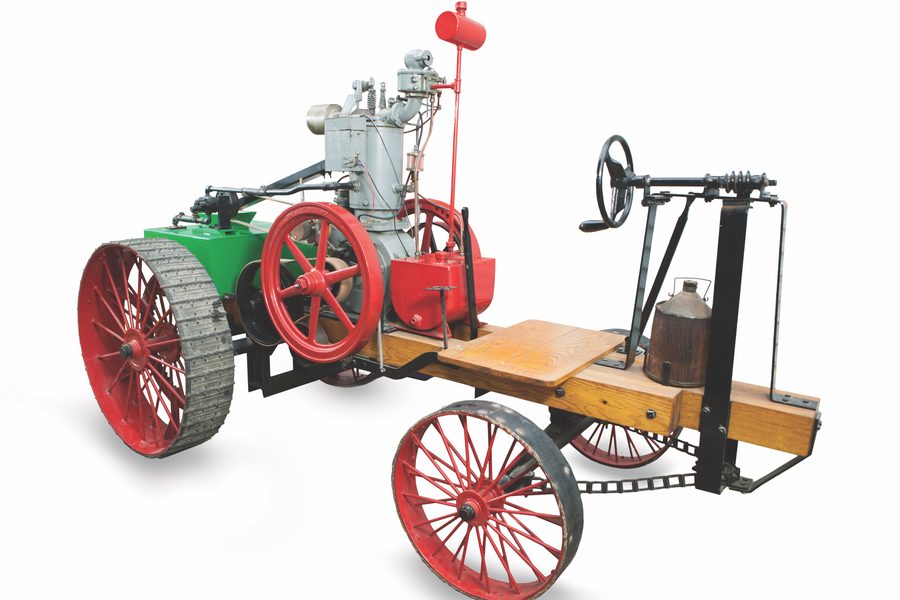
The Lanz Bulldog: A German Tractor with a Hot-Bulb Engine
Exploring the Lanz Bulldog, a notable German tractor series known for its hot-bulb engine, produced from 1921 to 1960.
The Lanz Bulldog, a series of tractors manufactured by Heinrich Lanz AG, was produced from 1921 until 1960, with over 220,000 units made during this period.
Introduction to the Lanz Bulldog The Lanz Bulldog is a significant series of tractors that emerged from Heinrich Lanz AG in Mannheim, Germany. Known for its unique hot-bulb engine, the Bulldog became one of the most popular tractors in Germany during its production run from 1921 to 1960.
The Hot-Bulb Engine Explained ### Functionality The hot-bulb engine, also referred to as a semi-diesel or Akroyd engine, operates on a distinct principle. Fuel ignites upon contact with a heated metal surface within a bulb. Initially, some ignition occurs when the fuel is introduced, but this quickly consumes the available oxygen in the bulb. Vigorous ignition happens when sufficient oxygen is introduced during the compression stroke.
Design Characteristics Typically, hot-bulb engines were designed as one or two-cylinder units, functioning as low-speed, two-stroke, crankcase-scavenged engines. This design contributed to the efficiency and reliability of the Lanz Bulldog tractors, making them well-suited for agricultural tasks.
The Production History of the Lanz Bulldog The Lanz Bulldog series commenced production in 1921, with the Lanz HL being the first model. Over the years, various iterations of the Bulldog were developed, culminating in the Lanz Bulldog D 9506. The production continued until 1960, during which time more than 220,000 units were manufactured. This extensive production run highlights the Bulldog's popularity and significance in the agricultural machinery market.
The Impact of John Deere's Acquisition In 1956, Heinrich Lanz AG was acquired by Deere & Company, leading to the rebranding of the Lanz product line as "John Deere Lanz." This acquisition marked a significant shift in the company's trajectory, as it integrated into a larger American agricultural machinery framework. Following the discontinuation of the Bulldog, the Lanz name gradually fell out of use.
Legacy of the Lanz Bulldog The Lanz Bulldog holds a notable place in agricultural history. Its design and functionality influenced the development of future tractors. The term "Bulldog" even became synonymous with tractors in certain regions of Germany, particularly Bavaria, demonstrating the lasting impact of this series on the agricultural landscape.
Conclusion The Lanz Bulldog represents a remarkable chapter in the evolution of tractor technology, particularly with its hot-bulb engine. Its production from 1921 to 1960, alongside the significant number of units produced, underscores its importance in the agricultural sector. The legacy of the Lanz Bulldog continues to be felt, reflecting the innovation and engineering prowess of its time.
Common questions
What is a hot-bulb engine?
A hot-bulb engine, also known as a semi-diesel or Akroyd engine, ignites fuel by contact with a heated metal surface inside a bulb, followed by air introduction during the compression stroke.
When did Lanz Bulldog production start?
Production of the Lanz Bulldog began in 1921 with the Lanz HL model.
How many Lanz Bulldogs were produced?
Over 220,000 Lanz Bulldogs were produced during its production run from 1921 to 1960.
Who acquired Heinrich Lanz AG?
Heinrich Lanz AG was acquired by Deere & Company in 1956.
Sources
- Lanz Bulldog (Wikipedia) retrieved 24 Oct 2026
- Hot-bulb engine (Wikipedia) retrieved 24 Oct 2026
- Heinrich Lanz AG (Wikipedia) retrieved 24 Oct 2026
Read next
Harry Ferguson and the Three-Point Hitch System
John Deere Waterloo Boy Silver 1:16 – 100th Anniversary